
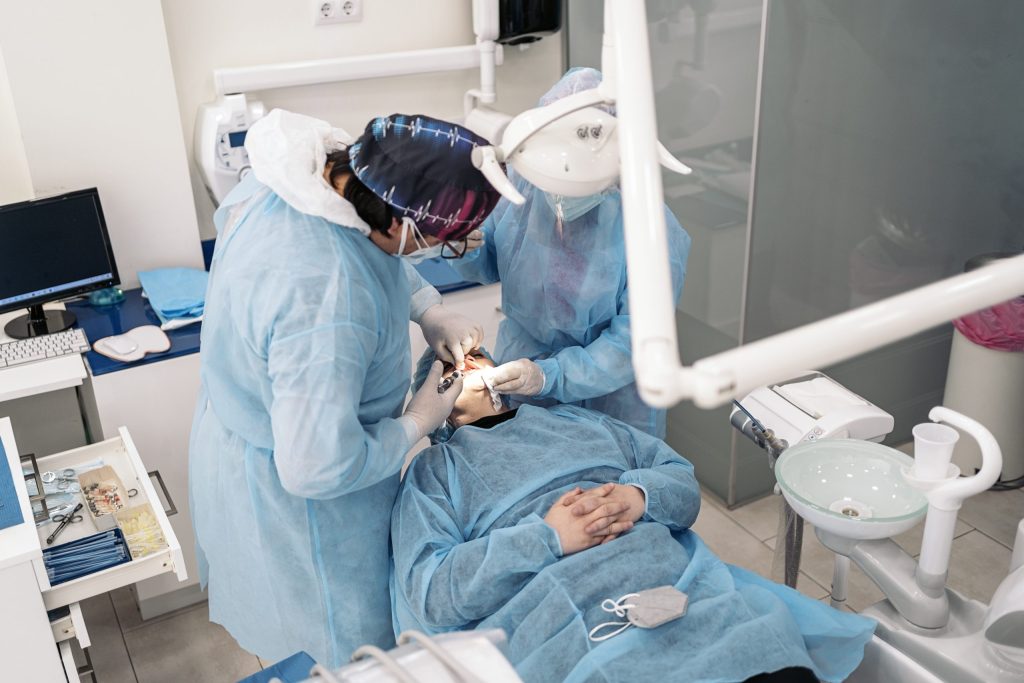
When it comes to the dental procedure, one of the chief concerns for many patients is pain or discomfort. This nervousness at times can be so intense that individuals may avoid seeking necessary treatment and suffer further oral health complications. If you are apprehensive about your upcoming dental appointment, you will be happy to learn that there are several ways to make the experience more bearable. In fact, visiting a Dentist Surprise AZ who provides IV sedation can keep you relaxed throughout the treatment, thus your anxiety level can be eased.
Even those of you who are not entirely sure what IV sedation includes may find the idea to be difficult. But, it’s a well-established practice that emphasizes patient safety and comfort. First, we are going to take a brief look at the aspects of sedation dentistry and then we will analyze the chemical compounds commonly used in IV sedation. After comprehending these features you will be more informed and have everything prepared should you choose to follow this pathway of sedation during your dental procedure.
What is Sedation Dentistry
Sedation dentistry is a broad term that refers to several methods that may be employed to assist patients in relaxing during dental procedures. This approach is particularly useful for people with severe dental anxiety, a low pain threshold, a strong gag reflex, or those who require extensive dental work in one visit.
Different levels of sedation can be used, depending on the complexity of the procedure and the patient’s level of anxiety:
- Minimal Sedation: The patient is awake but feels relaxed and less concerned.
- Moderate Sedation: The patient experiences a deeper level of relaxation and may not remember the procedure. They can still communicate verbally, but they may be a bit unclear.
- Deep Sedation: The patient is teetering on the edge of consciousness and may be awakened by being shaken gently. They will probably not remember the procedure.
- General Anesthesia: The patient is totally unconscious. This level typically is for more complex procedures or those patients who have extreme anxiety.
The method for administering the procedure is also a determining factor. The common techniques of oral sedation, inhalation sedation (laughing gas), and IV anesthesia are included. Each option has advantages and disadvantages, and the one chosen depends on the patient’s medical history and the dentist’s recommendation.
What Drug is Used for IV Sedation in Dentistry
IV sedation represents a specific kind of moderate to deep sedation that is directly administered into the bloodstream through the intravenous line. This straightforward method allows the dentist to quickly and precisely control the sedation level. Due to its rapid onset and precision of control, IV sedation is the best choice for patients requiring a controlled sedative effect.
In dentistry, the most common drug used for IV sedation is midazolam. Midazolam falls under the class of benzodiazepines that impart a calming effect on the central nervous system. As a result, it reduces anxiety, causes a state of relaxation, and may even lead to partial or total amnesia for the procedure. Aside from midazolam, some other benzodiazepines (like diazepam) and sedatives (e.g., propofol) can also be used, but the preference of midazolam is due to its fast onset of action, short duration of action, and fewer side effects caused when given correctly.
During IV sedation:
- Administration: A certified dental specialist injects a small needle into a vein in your arm or hand. Then via the bloodstream the sedative is introduced, leading to surface sedation in a matter of minutes.
- Monitoring: Your vitals blood pressure, heart rate, and oxygen levels are continuously checked during the procedure to guarantee safety. Subsequently, the dentist can adjust the sedation level based on your personal response.
- Recovery: Because IV sedation can stay longer in the body, you should arrange for someone to drive you home after your part. The majority of patients get rid of the first effect of the sedative in a couple of hours but it is good also to have a rest for the rest of the day.
Because midazolam has amnesic effects, many people say they remember almost nothing about the intervention. This is often a welcome break for those afflicted by mild to severe dental phobia.
Benefits of IV Sedation Dentistry
- Reduced Anxiety and Discomfort: The patients usually have a great fear of the dentist so much that to them the way to overcome it is to be sedated by IV instead of avoiding the dentist altogether. Throughout the entire procedure, one remains calm, and the pain can be purely kept at bay, if not eliminated.
- Greater Efficiency for Multiple Procedures: In case of the need for extensive dentistry like multiple fillings, crowns, or at least a combination of treatments IV sedation will help you go through multiple procedures on the same day in a pleasant way.
- Enhanced Control: The level of sedation can be precisely managed by the dentist. If deeper or lighter sedation is needed during the procedure, the dosage can be adjusted immediately.
- Fast-Acting: Compared to oral sedation that may take an hour to take effect, IV sedation works almost immediately.
- Potential Amnesia: Many patients either fully or partially forget the process. This can be particularly useful if one has severe anxiety since one will not remember the more unpleasant parts of the dental procedure.
Considerations Before IV Sedation
While IV sedation is safe for most patients, there are factors to consider before deciding if it’s right for you:
- Medical History: You need to inform the dentist about any medical conditions and medications you are taking. Certain conditions like sleep apnea, heart troubles, or chronic respiratory problems might attract some highlight or a change of the method of sedation that is to be applied.
- Fasting Instructions: You may be instructed to restrict any food or drink to the period before the application of anesthesia which usually is the case so as to lower the danger of nausea and other complications.
- Post-Sedation Care: It will not be possible for you to drive yourself home after the application of IV sedation immediately. Organizing a pickup and preparing for someone to stay with you if needed is what you should do.
- Potential Side Effects: You might encounter light side effects such as nausea, dizziness, or headaches. However, these effects will be present for just a few hours in almost all cases. If you encounter anything more serious or persistent, you have to call the dentist or a healthcare professional.
Who Can Benefit Most from IV Sedation
- Individuals with Dental Anxiety: Anyone who puts off important dental work because of fear can be a key candidate. for the application of sedation.
- Patients with Special Needs: People with conditions that are as severe as autism or sensory processing disorders can use sedation to mellow out on their trip to the dentist.
- Busy Individuals: You can make long appointments easy by having multiple procedures in one session using IV sedation.
- Those with a Strong Gag Reflex: Dentists who use sedation help those with a complex gag reflex feel better and carry out the surgical operation in an extremely efficient way.
Preparing for Your IV Sedation Appointment

- Discuss Your Problems: Talk frankly to your dentist regarding your worries and expectations. They will take you through the sedation process step by step to make sure that you understand everything.
- Observe Pre-Procedure Instructions: Your dentist might tell you to refrain from any food or drink, also refrain from certain medicines, or follow other instructions to lower the risk of complications.
- Consider Transport and Aftercare: Since you cannot be completely awake after your procedure, plan a transport for a trusted person to get you back home. If you live alone, it would be wise to request a friend or family member to stay with you for a few hours, should you feel sick.
- Inquire About the Price: Insurance companies have a different way of doing things so before going to your dentist to confirm IV sedation as a part of your plan to check insurance coverage with them. If that isn’t the case, there are many dental offices that provide a financing option which would make this service affordable for you.
Final Thoughts
IV sedation dentistry provides an invaluable service for people who have substantial anxiety or who have a wide range of dental problems. The technique can place you in a state of tranquility, relaxation, and memory impairment – making a once-dreaded event a pleasant one that you can feel in control of. Modern sedation techniques, especially midazolam, are both safe and effective when performed by competent practitioners.
If dental anxiety is preventing you from going to the dentist, it may be time to look into your options. Your local sedation dentist can offer the possibility of having a healthy mouth that is free of the worries of treatments you have been ignoring due to anxiety. With adequate support from a qualified sedation dentist and for your protection, you are able to secure optimal oral health in the way you choose without trading your comfortable and happy state.