
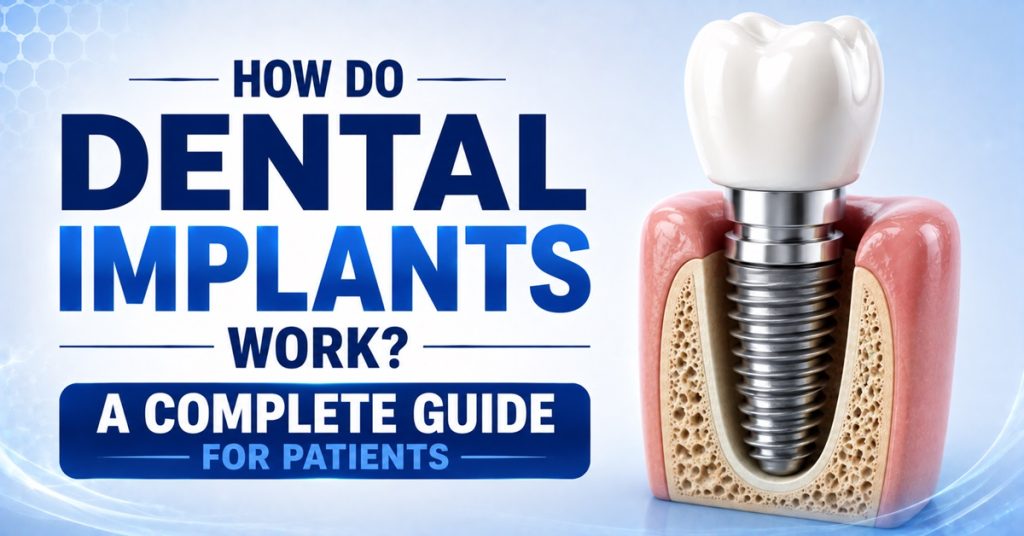
Dental implants replace missing tooth roots and support crowns, bridges, or dentures. Patients often worry about pain, surgery, healing, and whether an implant will feel natural. Our team explains each stage in clear terms so patients can approach treatment with comfort and confidence.
Patients seeking Cosmetic Dentistry in Surprise, AZ may ask how do dental implants work before choosing tooth replacement. An implant uses a biocompatible post placed in the jawbone, where bone gradually bonds with the implant. This process creates a stable base for a replacement tooth.
What Are Dental Implants?
A dental implant has three main parts:
- Implant post: The post acts as an artificial tooth root and sits inside the jawbone.
- Abutment: This small connector joins the implant post to the replacement tooth.
- Crown: The crown is the visible tooth-like restoration that restores appearance, chewing, and speech.
Together, these parts create a stable tooth replacement that can look and function much like a natural tooth.
How Do Dental Implants Work Step by Step?
A Dentistry in Surprise AZ consultation starts with a dental exam, X-rays, or 3D imaging. These images help the dental team check bone volume, gum health, nearby teeth, and the planned implant position.

1. Treatment Planning
The dental team reviews oral health, missing teeth, bone condition, medical history, and treatment goals. Bone grafting may be recommended when the jaw does not have enough healthy bone for stable implant support.
2. Implant Placement
The gum is numbed before the implant post is placed into the jawbone. Patients may notice firm pressure during the procedure, yet local anesthesia helps control discomfort.
3. Healing and Bone Bonding
The jawbone gradually bonds with the implant surface through a process called osseointegration. Healing can take several months, based on bone quality, implant location, and individual healing.
4. Abutment Placement
Once the implant has stable bone support, an abutment connects the implant to the future crown. Some treatment plans place the abutment during the same surgical visit.
5. Crown Placement
A custom crown is fitted over the abutment. The dental team checks the bite, form, color, fit, and comfort before completing the restoration.
How Do Full Dental Implants Work?
Patients missing many or all teeth may receive several implants that support a fixed bridge or full arch restoration. This approach can improve chewing stability, speech, smile appearance, and daily comfort.
The number and position of implants depend on jawbone health, bite forces, gum condition, and the selected restoration. Full arch treatment does not always mean one implant for every missing tooth.
How Do Screwless Dental Implants Work?
Some patients ask how do screwless dental implants work. Certain implant systems use a different connection method rather than a traditional screw-retained crown. The exact design depends on the implant system and restoration selected.
A dental evaluation is needed to determine which connection and restoration type fits the patient’s needs.
How Can Patients Support Implant Healing?
- Follow all post-treatment instructions from the dental team.
- Keep the mouth clean using the recommended brushing and rinsing routine.
- Choose suitable foods during early healing.
- Avoid smoking and tobacco products, which can interfere with healing.
- Attend follow-up visits so implant stability, gums, and bite can be checked.
A Stable Path to Tooth Replacement
Dental implants can restore missing teeth through a staged process involving implant placement, bone healing, an abutment, and a custom restoration. With proper planning and ongoing dental care, implants can provide strong support for comfortable chewing and a natural-looking smile.
Our team at Surprise Dental can evaluate missing teeth, jawbone health, gum condition, and restoration choices. Scheduling an implant consultation can help patients learn which treatment approach fits their oral health and smile goals.