
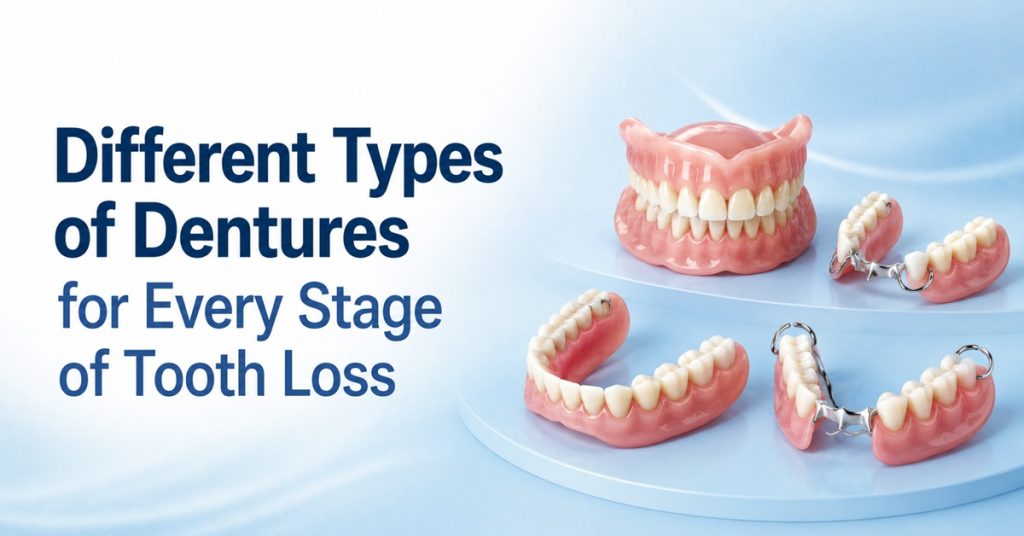
Tooth loss can happen gradually or all at once. Some people lose a single tooth, while others may lose several teeth over time. No matter the situation, many patients worry about their appearance, ability to eat comfortably, and overall oral health. Learning about the different types of dentures can help make treatment decisions less stressful and more informed.
At Surprise Dental, our team helps patients restore their smiles through personalized treatment solutions. Through Restorative Dentistry in Surprise, AZ, patients can find tooth replacement options that improve chewing ability, speech, comfort, and confidence. Modern dentures are available in many forms, making it possible to match treatment with each stage of tooth loss.
Missing teeth affect more than appearance. Gaps in the smile can impact bite function, jaw support, nutrition, and daily comfort. For this reason, selecting the right denture solution is an important step toward better oral wellness.
Many individuals seeking Dentistry in Surprise AZ, want a tooth replacement option that feels comfortable, looks natural, and supports their lifestyle. The good news is that today’s dentures offer far more choices than many people realize.
Why Dentures Remain a Popular Tooth Replacement Option?
Dentures have helped millions of people restore their smiles. Modern materials, improved fit, and advanced dental technology have made dentures more comfortable and attractive than ever before.
Patients often choose dentures for several reasons:
- They restore missing teeth and improve smile appearance.
- They help support speech and communication. Missing teeth can affect pronunciation, making conversations more difficult. Dentures can improve speech clarity and confidence.
- They improve chewing ability. Replacing missing teeth allows patients to enjoy a wider variety of foods, supporting better nutrition and overall health.
- They provide a practical solution for many levels of tooth loss. Whether someone is missing one tooth or an entire arch, there is often a denture option available.
Understanding the various types of dentures helps patients select a solution that aligns with their needs and goals.
Partial Dentures for Early Stages of Tooth Loss
What Are Partial Dentures?
Partial dentures are used when some healthy natural teeth remain. They fill gaps created by missing teeth and help maintain proper alignment within the mouth.
These appliances are custom designed to blend with existing teeth and support daily function.
Benefits of Partial Dentures
- Preservation of Remaining Teeth: Partial dentures work alongside existing teeth rather than replacing an entire arch. This approach supports bite balance and oral function.
- Improved Appearance: Missing teeth can create visible gaps that affect confidence. Partial dentures restore a fuller smile and improve facial aesthetics.
- Better Chewing Ability: Replacing missing teeth helps distribute bite pressure more evenly, making meals more comfortable and enjoyable.
- Cost Effective Treatment: Partial dentures often provide an affordable solution for patients who are missing a limited number of teeth.
Who May Benefit?
Patients missing one or several teeth in different areas of the mouth are often good candidates for partial dentures.
Immediate Dentures After Tooth Extraction
What Are Immediate Dentures?
Immediate dentures are placed soon after teeth are removed. This option allows patients to avoid being without teeth during the healing process.
Many individuals appreciate having a replacement smile available right away.
Benefits of Immediate Dentures
- Immediate Smile Restoration: Patients can maintain their appearance immediately following extractions.
- Support During Healing: Immediate dentures help protect healing tissues and provide temporary function.
- Confidence During Recovery: Social interactions often feel more comfortable when patients do not have visible gaps after tooth removal.
Considerations
As gums heal and change shape, adjustments or relines may be needed to maintain a proper fit.
Full Dentures for Complete Tooth Loss
What Are Full Dentures?
Full dentures replace all teeth in the upper arch, lower arch, or both arches. They rest on the gums and restore smile appearance, chewing function, and speech.
This is one of the most recognized different types of dentures available today.
Benefits of Full Dentures
- Complete Smile Restoration: Full dentures replace an entire set of missing teeth, creating a complete and natural looking smile.
- Support for Facial Appearance: Tooth loss can lead to a sunken appearance around the mouth. Dentures help support facial contours.
- Improved Daily Function: Patients can enjoy improved speech and greater ability to chew compared with having no teeth.
- Accessible Treatment Option: Full dentures remain a practical solution for many individuals experiencing complete tooth loss.
Considerations
Adjustment periods vary from person to person. Some patients require time to adapt to speaking and eating with new dentures.
Implant Supported Dentures for Added Stability
What Are Implant Supported Dentures?
Implant supported dentures combine traditional dentures with dental implant technology. Implants placed in the jawbone provide support for the denture.
This approach creates stronger retention and greater stability.
Benefits of Implant Supported Dentures
- Reduced Movement: One common concern with traditional dentures involves slipping during meals or conversations. Implant support greatly improves stability.
- Enhanced Comfort: Improved retention often leads to a more secure and comfortable fit.
- Better Chewing Strength: Patients can often enjoy a wider range of foods with greater confidence.
- Support for Jawbone Health: Dental implants stimulate the jawbone and help reduce bone loss associated with missing teeth.
Who May Benefit?
Patients seeking greater stability than traditional dentures often find this option appealing.
Overdentures
What Are Overdentures?
Overdentures fit over retained natural teeth or dental implants. This design provides added support and retention.
These dentures are commonly recommended when certain teeth can still contribute to overall stability.
Benefits of Overdentures
- Better denture retention.
- Improved comfort.
- Additional support from remaining structures.
- Enhanced chewing performance.
Many patients appreciate the extra stability offered by this treatment option.
Choosing the Right Denture for Your Stage of Tooth Loss
Selecting among the various types of dentures involves several factors.
Number of Missing Teeth
Patients missing a few teeth may benefit from partial dentures. Individuals missing all teeth may require full dentures or implant supported solutions.
Oral Health Status
Healthy gums, bone levels, and remaining teeth influence treatment recommendations.
Lifestyle Preferences
Some patients prioritize affordability. Others place greater value on stability, retention, and long term comfort.
Treatment Goals
A personalized evaluation helps determine which option aligns with cosmetic goals, functional needs, and future expectations.
Tips for Maintaining Dentures
Proper care supports comfort, appearance, and longevity.
- Clean dentures daily using recommended products to remove plaque and food particles.
- Attend regular dental visits for fit evaluations and oral health monitoring.
- Handle dentures carefully during cleaning to reduce the risk of damage.
- Store dentures properly when not being worn.
- Follow all care instructions provided during treatment.
Consistent maintenance helps dentures perform at their best for many years.
Conclusion
The many different types of dentures available today make it possible to address every stage of tooth loss. From partial dentures for small gaps to full dentures and implant supported restorations for complete tooth replacement, there is a solution suited to nearly every situation.
At Surprise Dental, our team is committed to helping patients choose the treatment option that best supports their oral health, comfort, appearance, and lifestyle. Every smile is unique, and every treatment plan deserves personalized attention.
If missing teeth are affecting confidence, eating habits, or daily comfort, now is an excellent time to seek guidance. Contact our office today to schedule a consultation, discuss available denture options, and learn how restorative dental care can help create a healthier, stronger, and more confident smile.