
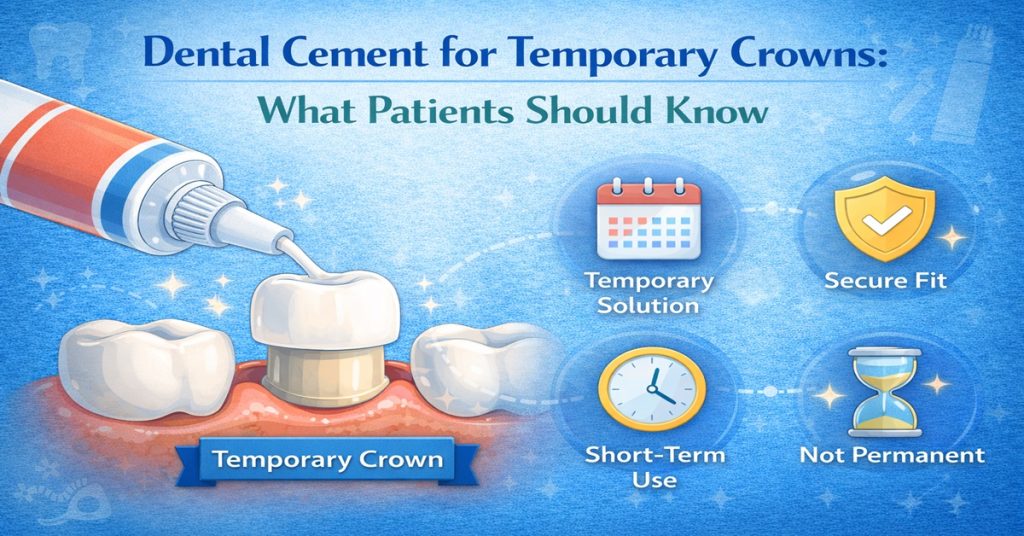
A temporary crown protects a prepared tooth during the short time before the final crown is placed. Many patients feel uneasy when the temporary crown feels loose, shifts during chewing, or lifts slightly during brushing, so questions about dental cement for temporary crowns are very common at Surprise Dental. Our team wants every patient to feel calm and informed during this short stage of treatment.
Patients searching for Cosmetic Dentistry in Surprise, AZ often expect the final crown visit to arrive quickly, yet the temporary stage still matters for tooth comfort, gum protection, and bite stability. The cement placed under a temporary crown holds the crown in position, seals the prepared tooth, and protects sensitive dentin until the permanent crown returns from the lab.
A temporary crown uses a softer material than a permanent crown, so daily habits during this stage affect comfort more than many patients expect. The cement under it is made for short-term retention rather than long-term locking strength.
During follow up visits, patients often ask whether the crown should feel firm, whether mild movement is normal, or whether a small gap means the crown needs attention.
A Surprise Dentist often checks temporary crown fit, gum contact, and bite pressure if any looseness starts before the final crown appointment.
What Temporary Crown Cement Actually Does?
The prepared tooth under a temporary crown has fresh exposed surfaces that need coverage. Temporary dental cement for crowns acts as a protective layer between the tooth and the temporary shell.
This cement gives short term adhesion, soft sealing, and easy removal later when the permanent crown arrives.
Main jobs of temporary cement include:
- Holding the temporary crown in place during normal speech, swallowing, and gentle chewing. The material grips the crown enough for short daily function yet allows easy removal later.
- Protecting dentin from air, cold drinks, and food contact. A prepared tooth often feels sensitive without this protective layer.
- Lowering food entry near the crown margin. Food trapped near exposed dentin may trigger discomfort.
- Helping the tooth keep its prepared shape until the permanent crown is ready.
Why Temporary Cement Feels Different From Permanent Cement?
Permanent cement bonds with stronger retention and long-term sealing. Temporary cement uses a softer bond so the crown can be removed without harming the prepared tooth.
Patients sometimes notice slight movement during flossing or chewing, and that does not always mean failure.
Temporary cement often feels different in these ways:
- The crown may feel less solid than a final crown during the first few bites. The material under it is softer.
- The edge may feel slightly raised to the tongue until the mouth adjusts.
- Mild pressure during chewing may happen during the first day.
- Small temperature sensitivity may happen if the prepared tooth was already sensitive before crown treatment.

What Happens if a Temporary Crown Feels Loose?
A loose temporary crown creates concern, yet calm action often protects the tooth until a dental visit happens.
Dental cement for temporary crown products sold for home use may help only for short emergency placement when the crown fully comes off, and a visit cannot happen right away.
Signs the temporary crown may be loose:
- The crown lifts slightly during flossing.
- A clicking sensation happens during chewing.
- The crown rotates slightly when touched with the tongue.
- Food starts catching under one side.
A loose crown should not stay untreated for long, since the prepared tooth under it can become sensitive.
When Home Temporary Cement Can Help?
Some patients experience a temporary crown coming off during meals or brushing. If the crown remains intact, short term home placement may help protect the tooth until the office visit.
Dental cement for temporary crowns sold for emergency use is made only for short placement, not for full treatment replacement.
Safe steps for short home placement include:
- Rinse the crown gently with clean water and remove visible food particles. A clean inside surface helps a temporary fit.
- Rinse the tooth gently and avoid scraping the prepared area.
- Place a small amount of home temporary cement inside the crown, not overfilling it.
- Seat the crown gently in the same direction it came off. It should fit one way only.
- Bite gently on a soft cloth for a short moment so it seats evenly.
Home placement should stay temporary until the office checks the fit.
What Should Never Be Used Instead of Dental Cement?
Household glue, craft adhesive, or hardware products should never touch a temporary crown or prepared tooth.
These materials may injure gum tissue, trap bacteria, or damage the crown interior.
Unsafe products include:
- Super glue
- Household adhesive
- Nail glue
- Wax mixed with glue
- Hard resin products not made for oral use
Only products made for oral temporary crown care should ever touch the tooth.
How Long Does Temporary Cement Usually Hold?
Temporary cement often holds well until the final crown visit, which often falls within one to three weeks.
Yet sticky foods, hard chewing, floss pull, or grinding may loosen the bond sooner.
Habits that help cement stay stable:
- Eat soft meals on the opposite side when possible. Rice, eggs, pasta, soup, yogurt, and soft vegetables place less pull on the crown.
- Avoid sticky foods such as caramel, gum, toffee, or chewy candy. These often lift temporary crowns.
- Avoid hard seeds, nuts, ice, and crusty bread near that tooth.
- Floss by sliding the floss out sideways rather than lifting upward.
Why Temporary Crowns Need Gentle Cleaning?
Plaque near a temporary crown margin may irritate gums and loosen cement.
Gentle cleaning keeps the crown stable and keeps gum tissue calm before final placement.
Helpful cleaning habits include:
- Use a soft toothbrush with light circular motion near the crown edge.
- Clean nearby teeth every day without snapping floss downward.
- Rinse after meals if food gathers near the crown.
- Watch for redness near the gumline, since inflamed gum tissue may make the crown feel sore.
What a Patient May Feel if Cement Is Wearing Out?
Cement often softens before full crown loss. Small warning signs often appear first.
Signs the cement may be weakening:
- The crown feels taller during one bite.
- Slight movement appears during brushing.
- Cold air causes more sensitivity than before.
- Food enters under one side.
These signs often mean the crown should be checked before it comes off fully.
Why Temporary Cement Matters for Tooth Comfort?
The prepared tooth under the temporary crown has exposed dentin channels that react to air, water, and temperature. Without cement protection, sensitivity often rises fast.
Temporary dental cement for crowns protects the tooth from those triggers until permanent placement.
A temporary crown without proper seating may let cold drinks reach the prepared tooth edge and create sudden sensitivity.
What Happens at the Final Crown Visit?
The temporary crown is removed, temporary cement is cleaned away, and the final crown is tried in for fit.
During final placement, our team checks:
- Crown edge fit near the gumline
- Bite contact during chewing
- Shade match
- Contact with nearby teeth
- Comfort during jaw closing
Permanent cement is placed only after the fit feels correct.
Conclusion
A temporary crown is a short yet valuable step that protects a prepared tooth before the final crown arrives. Dental cement for temporary crowns supports comfort, keeps the tooth covered, and helps the mouth stay stable during that short waiting period.
At Surprise Dental, our team encourages patients to call for guidance if a temporary crown loosens, lifts, or falls out. A quick visit or short consultation can protect the tooth, keep treatment on track, and help the final crown seat correctly for long-term comfort.