
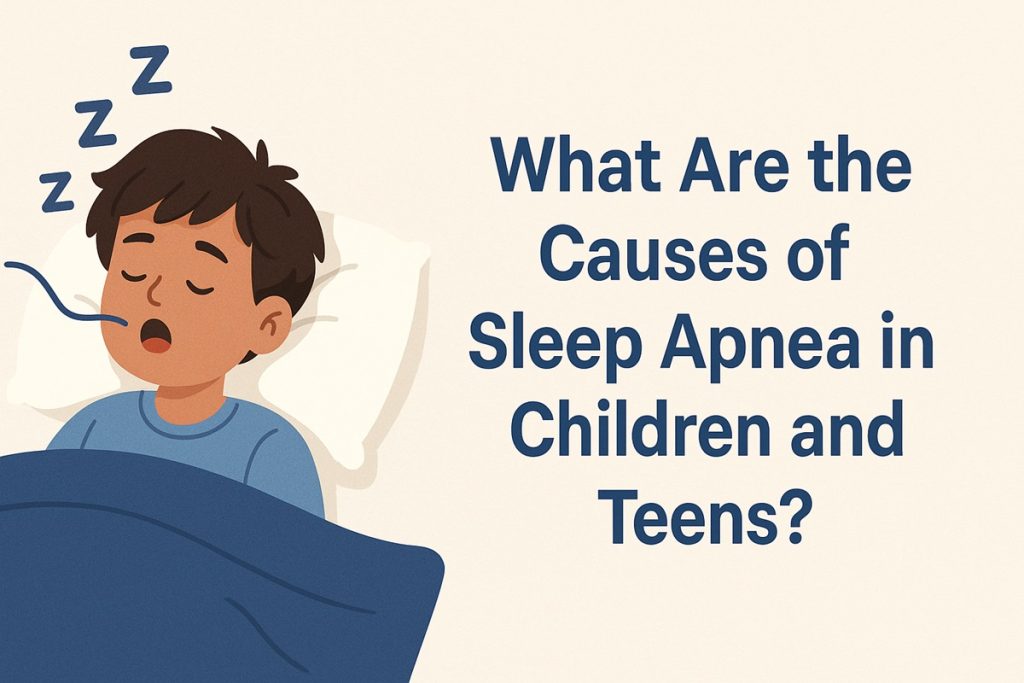
Every parent wants their child to sleep peacefully and wake up refreshed. When disrupted breathing affects their rest, it can be confusing and concerning. Many caregivers come to us asking about the causes of sleep apnea in kids and teens, looking for trusted answers that ease their worries and guide their next steps. At Surprise Dental, we’re here to support families by offering clarity, care, and real solutions.
Understanding sleep disorders at a young age can be overwhelming. If you’re noticing loud snoring, restless sleep, or mood shifts during the day, it may be connected to Sleep Apnea in Surprise, AZ. Our goal is to provide you with the knowledge to help your child rest better, breathe easier, and live healthier.
What is Sleep Apnea in Kids and Teens?
Sleep apnea is a condition where breathing starts and stops repeatedly during sleep. In younger individuals, this can impact both physical growth and emotional balance. The two most common types in this age group are:
- Obstructive Sleep Apnea (OSA): Caused by a physical blockage of the airway, often from enlarged tonsils or adenoids.
- Central Sleep Apnea: The brain doesn’t consistently send signals to the muscles that control breathing.
These episodes interrupt deep sleep, leaving the child feeling tired, irritable, and sometimes even struggling in school.
Top Causes of Sleep Apnea in Children and Adolescents
Understanding what are the causes of sleep apnea helps pinpoint what might be affecting your child. Each child is unique, but some causes are more commonly found in this age group.
1. Enlarged Tonsils and Adenoids
- These tissues at the back of the throat can grow larger in childhood.
- When too large, they narrow the airway and cause obstruction during sleep.
- This is a leading reason for surgery in pediatric sleep apnea cases.
2. Obesity and Weight-Related Issues
- Extra tissue in the neck and chest area can restrict airflow during sleep.
- Weight gain impacts oxygen flow and increases snoring and apneic episodes.
- Addressing lifestyle changes early can support better breathing habits at night.
3. Structural and Facial Development Issues
- A small jaw, narrow palate, or overbite can impact breathing posture during sleep.
- These structural traits are often inherited or related to early development patterns.
- A Wicker Park Dentist might use orthodontic treatments to improve airway alignment.
4. Allergies or Chronic Nasal Congestion
- Constant stuffiness from allergies or sinus issues forces mouth breathing.
- Mouth breathing during sleep contributes to dryness and airway collapse.
- Treating the source of the congestion often leads to better sleep quality.
5. Neuromuscular Conditions
- Conditions like cerebral palsy or muscular dystrophy affect muscle tone.
- Weak throat muscles can contribute to airway instability during rest.
- These children may need a sleep specialist’s guidance and ongoing support.
6. Family History or Genetic Influence
- Children with family members who have sleep apnea may be at higher risk.
- This includes patterns like loud snoring or frequent awakenings.
- Genetics can play a role in facial structure, weight distribution, and sleep rhythms.
Warning Signs Parents Should Not Ignore
Spotting the warning signs early can help avoid long-term complications. Some signs that point toward sleep apnea in kids and teens include:
- Frequent loud snoring
- Gasping or choking during sleep
- Daytime fatigue or napping
- Bedwetting (in younger children)
- Attention problems or hyperactivity
- Slow growth or developmental delays
If your child shows several of these symptoms, an evaluation might be needed to understand what’s happening during sleep.
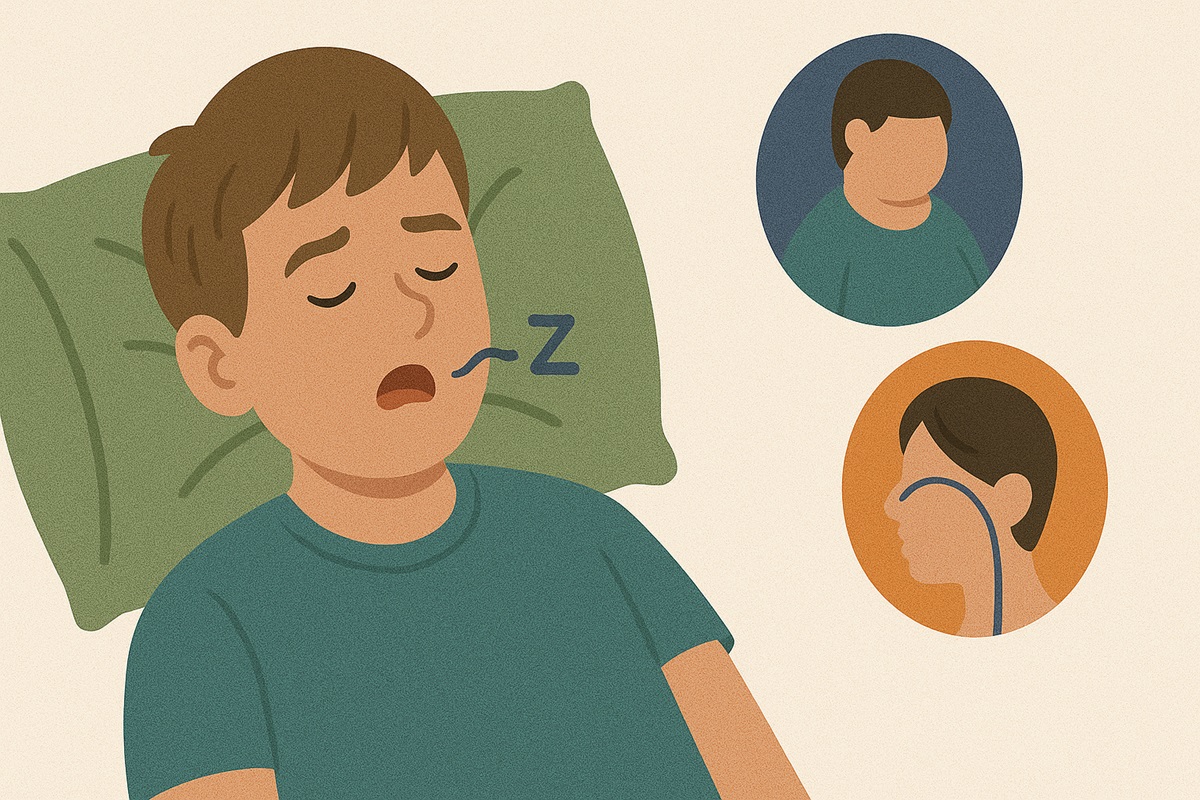
The Impact of Sleep Apnea on Your Child’s Life
Sleep apnea does more than disrupt sleep. It can affect how your child learns, behaves, and even grows. Oxygen supply plays a vital role in physical and cognitive development.
Without restful sleep, children may struggle with:
- School performance
- Focus and memory
- Emotional regulation
- Weight gain and metabolic issues
- Delayed growth or early onset of puberty
A sleep study, often done at night in a monitored setting, is one of the most effective ways to evaluate the condition and determine what support is needed.
Practical Steps to Help Your Child Breathe and Sleep Better
Here are realistic ways parents can support their child if sleep apnea is suspected or diagnosed:
1. Medical Evaluation
- Consult with a pediatrician or ENT to evaluate tonsil and adenoid size.
- Discuss allergy testing if nasal congestion is frequent.
2. Lifestyle Support
- Encourage regular activity and healthy meals to support a balanced weight.
- Set a calming nighttime routine with screen-free time before bed.
3. Oral and Airway Development
- A dentist trained in airway-focused care may suggest appliances that support jaw development.
- For those looking for a Surprise Dentist, we offer guidance on airway growth and orthodontic support.
4. Manage Allergies and Asthma
- Keep indoor air clean with filters.
- Use allergy-safe bedding and reduce dust exposure.
5. Regular Follow-Ups
- Keep up with medical or dental checkups.
- Adjust treatment plans if your child’s growth or needs change over time.
How We Help at Surprise Dental
At Surprise Dental, we treat every child like our own. We listen carefully to your concerns, explain conditions in a way that’s easy to understand, and offer real options. We provide screenings, referrals, and tools that help your family feel confident about what comes next.
Our team knows how much sleep affects every part of your child’s life. When your child breathes better, everything gets better.
A Comforting Thought to Leave With
Children are resilient, and sleep apnea can often be managed successfully with the right steps. What starts as concern can turn into confidence once answers are clear and support is strong.
If your child is struggling with sleep, restlessness, or snoring, it might be time to look deeper. Our team is ready to help your family take the next step. Let’s talk about what you’ve noticed and what we can do together.
Schedule a visit with us today to learn more or to book a sleep consultation. Your child’s better rest starts with a simple step forward.