
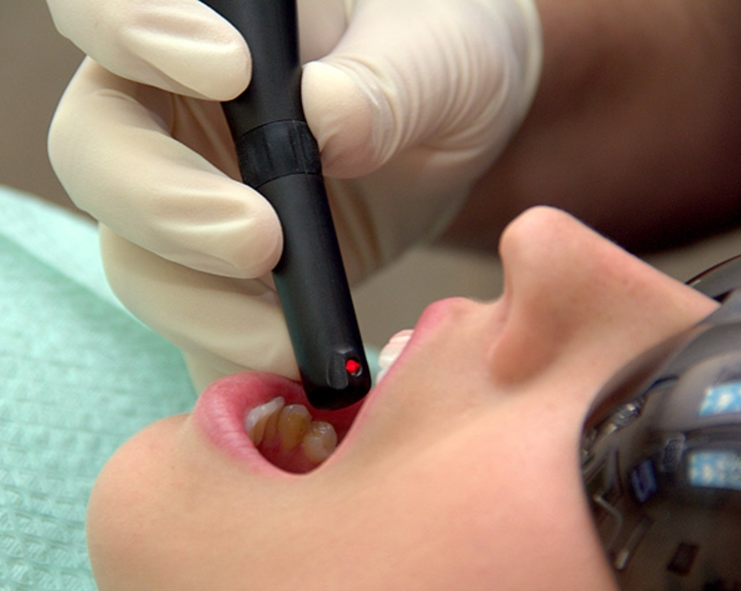
Advancements in dental technology have revolutionized the way oral health issues are diagnosed and treated. One such breakthrough is laser cavity detection, an innovative method that enables dentists to identify cavities with remarkable precision. Unlike traditional tools like probes or X-rays, laser cavity detection utilizes light technology to pinpoint areas of decay, making it faster, more accurate, and less invasive.
If you’ve ever wondered how dentists find hidden cavities or decay in your teeth, this advanced technique provides a fascinating insight into modern dentistry. But how exactly does it work, and what are its benefits? Let’s delve deeper.
How Does Laser Cavity Detection Work?
Laser cavity detection operates on the principle of fluorescence. A specialized laser device is used to scan the teeth, emitting light into the tooth structure. When the light hits healthy enamel and dentin, it reflects in a specific way. However, when decay is present, it absorbs the light differently, producing a distinct fluorescence.
This variation in fluorescence allows the device to detect even the smallest cavities that may not be visible to the naked eye or on traditional X-rays. It’s particularly effective in identifying early-stage decay, giving dentists the opportunity to treat it before it progresses into a more significant problem.
Why is Laser Cavity Detection Important?
Dental decay is one of the most common oral health issues, yet it often goes unnoticed until it causes discomfort or visible damage. Traditional diagnostic tools, while effective, sometimes fail to detect minor decay in hard-to-see areas such as between teeth or beneath the enamel surface.
Laser cavity detection addresses these limitations by:
- Increasing Accuracy: The technology is highly sensitive and can detect decay in its earliest stages, even when it’s too small to be seen on X-rays.
- Minimizing Invasiveness: No probing or scraping is needed, making the process more comfortable for patients.
- Reducing Radiation Exposure: Unlike X-rays, laser detection doesn’t expose patients to radiation, making it safer for repeated use.
- Improving Treatment Outcomes: Early detection means dentists can intervene sooner, often with less invasive treatments like fillings instead of crowns or root canals.

What to Expect During Laser Cavity Detection
The procedure is quick, painless, and entirely safe. During your visit, your dentist will use a handheld laser device to scan your teeth. The process is non-contact, meaning the device doesn’t physically touch your teeth.
If the laser detects areas of decay, the findings are displayed in real-time on a monitor. Your dentist can then discuss the results with you, explaining any treatment options if necessary.
Who Can Benefit from Laser Cavity Detection?
This technology is suitable for patients of all ages. Children, who are particularly prone to cavities, can benefit greatly from early detection and treatment. Adults, especially those with deep grooves in their molars or previous dental restorations, may also find this technology invaluable.
Additionally, people who experience anxiety about dental visits may appreciate the non-invasive and pain-free nature of laser cavity detection.
The Role of Technology in Modern Dentistry
Laser cavity detection is just one example of how dental technology is evolving to meet patient needs more effectively. It’s part of a larger trend toward precision, comfort, and efficiency in dental care. Whether you’re dealing with routine cleanings or advanced treatments, choosing a practice that invests in cutting-edge technology can make a significant difference in your experience and outcomes.
If you’re searching for a skilled and experienced Dentist Surprise AZ who utilizes the latest tools like laser cavity detection, consider visiting Surprise Smiles Dental. Their team is dedicated to providing high-quality, patient-centered care that ensures your oral health is in the best hands.
Final Thoughts
Laser cavity detection is a game-changer in dental diagnostics, offering unparalleled accuracy and early intervention opportunities. By embracing this advanced technology, dentists can provide better care and help patients maintain healthier smiles with less invasive treatments.
When choosing a dental provider, it’s worth considering practices that offer such innovations, as they reflect a commitment to staying at the forefront of patient care. From identifying decay to preserving the longevity of your teeth, laser cavity detection truly enhances the way we approach oral health.-