
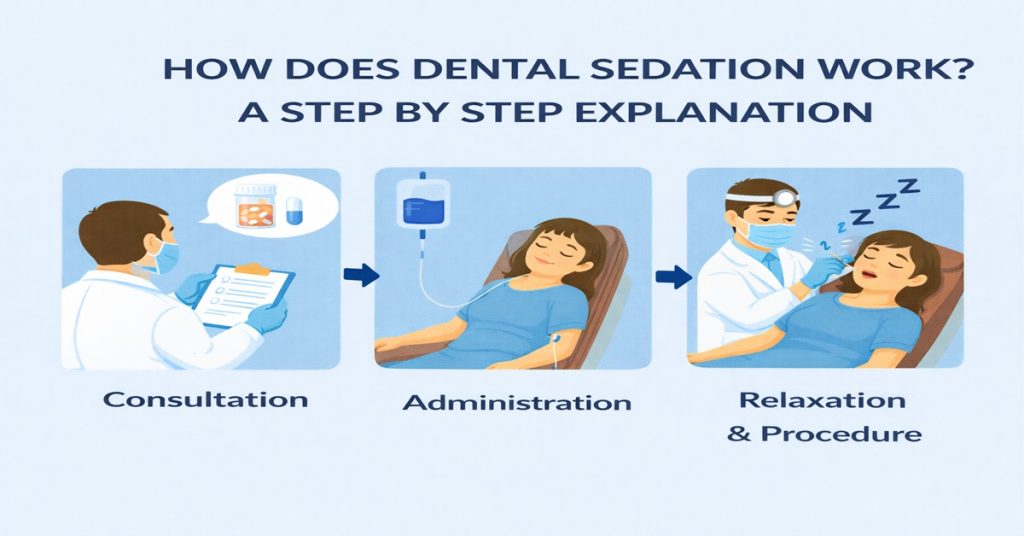
Many adults feel nervous before a dental visit. The sound of tools, fear of pain, and loss of control may create stress even before sitting in the chair. Our team meets patients every day who want care without fear and tension. This guide offers calm clarity for anyone asking how does dental sedation work and what truly happens at each stage of the process.
At Sedation Dentistry in Surprise, AZ, patients often arrive with fast breathing, tight muscles, and restless thoughts. Sedation supports the body and mind, so treatment may move forward with comfort rather than fear. The goal stays simple. The patient feels calm. The dentist works with a steady focus. The body rests in a safe, relaxed state.
Many patients still hold doubts about how sedation changes awareness, pain, and memory. Fear often rises from the unknown rather than the treatment itself. Clear knowledge forms a bridge between fear and trust. Each step of sedation follows a smooth medical process that protects patient safety at all times.
Patients at a Dentist Surprise AZ location often share worries about control, pain signals, and recovery time. These worries shape care choices in a real way. A clear step-by-step view of sedation helps patients feel prepared rather than tense on visit day.
What Dental Sedation Does Inside the Body?
Dental sedation works through the nervous system. The medicine guides the brain into a calm state. Stress signals that come from fear slow down. Muscles soften. Heart rhythm steadies. Breathing stays smooth.
Pain control comes from a second layer through local numbing. Sedation calms the mind. Local anesthetic blocks pain pathways. These two forms work together to support comfort during care.

Step One Health Review Before Sedation Begins
Every safe sedation visit starts with a full health review. This step shapes patient safety from the first moment.
- Review of medical history
- Past surgeries
- Heart rhythm patterns
- Breathing habits during sleep
- Review of daily medicine intake
- Blood pressure tablets
- Sleep aids
- Anti-anxiety medicine
- Review of past sedation response
- Past nausea
- Past dizziness
- Past allergic response
This review guides the right sedation type and dose for each patient.
Step Two: Preparation on the Day of Treatment
On the visit day, the patient arrives with simple prep steps already followed at home. These steps support a steady sedation response.
- Light meal or fasting based on sedation type
- Comfortable clothing for easy body rest
- Removal of contact lenses for eye comfort
- A trusted adult is present for ride support when oral or IV sedation is used
These steps support calm entry into the sedation process.
Step Three: Placement of Sedation
Sedation enters the body in different ways based on the chosen method. Each path guides the same goal of calm awareness.
Nitrous Oxide Placement
- A soft nose mask fits over the nose
- Calm gas flows in a steady rhythm
- The brain reaches a relaxed state within minutes
- The patient stays awake and responsive
Oral Sedation Placement
- A pill enters through the stomach
- The blood absorbs the medicine over time
- Drowsiness often rises within an hour
- The patient feels heavy and relaxed
IV Sedation Placement
- A thin needle is placed into a vein
- The medicine enters the bloodstream at once
- Deep calm rises within minutes
- Awareness drops to a sleep-like level
Each method stays guided by trained hands and close body monitoring.
Step Four: Monitoring During Sedation
Once sedation starts, the body remains under constant watch. This step protects patient safety without pause.
- Heart rhythm tracking
- Oxygen level checks
- Blood pressure checks
- Skin tone observation
These signals give real-time feedback on how the body responds. Any change leads to a fast medical response.
Step Five: Local Numbing for Pain Signals
Sedation calms the mind. Local numbing blocks pain at the tooth and gum level.
- The dentist applies a numbing agent to the treatment area
- Pain nerves lose their signal strength
- Pressure may feel present
- Sharp pain does not travel to the brain
This step pairs with sedation so the patient feels calm in mind and free of pain in the mouth.
Step Six: The Treatment Phase Under Sedation
During treatment, the patient rests in a relaxed state. Muscles stay loose. Jaw tension drops. Breathing remains steady.
Many patients under deeper sedation recall little of this phase. The body remains safe under constant watch while the dental team works with steady focus and precision.
Step Seven: Sedation Fade After Treatment
Once care ends, the sedation flow stops. The body begins its natural clearing process.
- The brain receives fewer sedation signals
- Alertness returns in slow stages
- Eye focus clears
- Body balance returns with rest
Time for full alert feeling changes based on sedation type and the body response of each patient.
How Pain Feels After Sedation Wears Off?
Pain after the visit does not arise from sedation. It links to the dental procedure itself. The dentist guides pain control with safe steps.
- Cold packs for swelling control
- Prescribed medicine when needed
- Soft food plan
- Head elevation during sleep
These habits support comfort during early healing.
Emotional Response After Sedation
Many patients feel relief once the visit ends. Fear often fades after a calm experience. Trust builds from the memory of comfort rather than stress. This emotional shift shapes future care habits in a healthy way.
What Affects How Strong Sedation Feels?
Sedation depth and duration do not feel the same for every patient. Several body traits guide response strength.
- Body mass
- A larger body frame may hold medicine longer
- Age
- Older adults may feel slower alert return
- Liver function
- The liver clears medicine during recovery
- Daily medicine use
- Some tablets may slow sedation clearance
These factors guide the dentist in dose planning for safe comfort.
Common Pain Points About Dental Sedation
Many adults delay care due to repeated fear patterns.
- Fear of pain
- Fear of loss of control
- Fear of choking
- Fear of long recovery
- Fear of memory gaps
Sedation directly addresses these fear points through calm awareness and pain signal reduction.
How Sedation Builds Safer Care Conditions?
A calm patient stays still. Still movement supports precise care. Precise care protects natural tooth structure. Sedation thus supports both comfort and long-term oral health.
Tips That Support a Smooth Sedation Visit
Patients may support their own comfort through simple habits.
- Sleep well the night before
- Avoid caffeine before care
- Wear loose clothing
- Practice slow breathing upon arrival
- Share fear with the care team before sedation begins
These steps guide a smoother sedation response in many adults.
What Patients Often Ask About Sedation?
- Will breathing stay steady
- Oxygen tracking stays active through the full visit
- Will pain break through
- Local numbing and sedation work together
- Will memory remain
- Many patients recall little under deeper sedation
- Will alert feeling return fast
- Alertness returns in stages after sedation stops
Each answer builds clarity through steady facts.
Why Trust Between Patient and Team Matters?
Sedation places the patient in a calm state guided by medicine and monitoring. Trust shapes emotional comfort during this process. Open talk before the visit supports that trust. Time for questions shapes that trust. Respect for fear shapes that trust.
At Surprise Dental, our team guides each sedation visit with a steady focus on safety, comfort, and patient respect.
Conclusion
Fear of the unknown often feels heavier than the procedure itself. Learning how does dental sedation work gives patients a map through that unknown. Step by step, knowledge shifts fear into calm readiness. Sedation offers a path to relaxed dental care with full body safety.
Our team invites any patient with sedation questions or dental anxiety to request a comfort consultation. A short visit may open the door to calm care, steady healing, and stronger oral health. Schedule a visit and allow our team to guide each step with care and steady support.