
Dental implant care often raises fear tied to pain, sound, pressure, and time spent in the chair. Many adults delay care due to these worries. Our team meets patients who wish for calm treatment without stress or tension. This guide speaks to those concerns with warmth and steady facts so each reader feels supported before making care choices.
Many patients seeking Sedation Dentistry in Surprise, AZ, ask if deep relaxation remains safe during implant surgery. The body response, the level of comfort, and the recovery phase all shape that question. Knowledge builds calm. That calm supports steady decisions based on trust rather than fear.
What IV Sedation Means for Dental Implant Care?
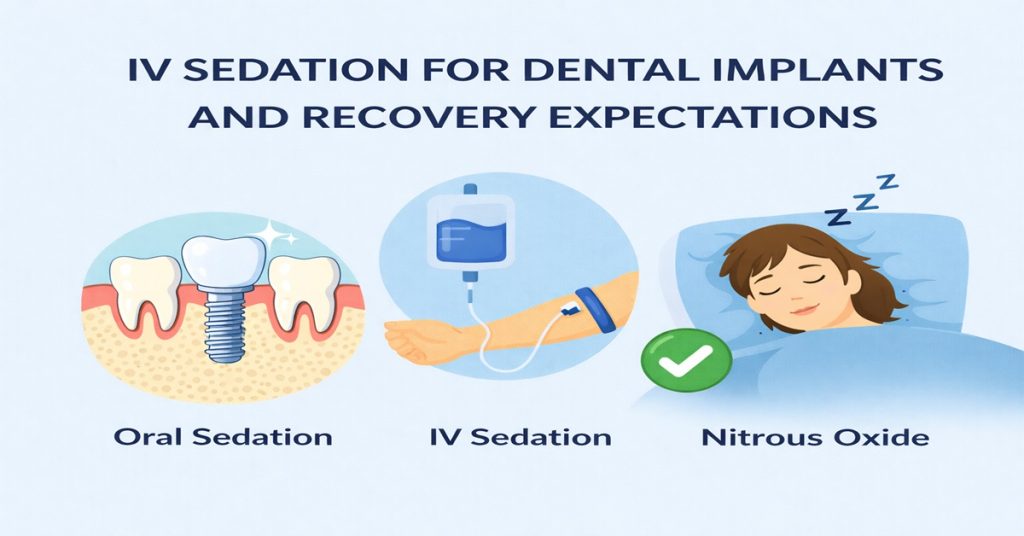
IV sedation for dental implants refers to medication delivered through a vein that guides deep relaxation during implant placement. The patient rests in a sleep-like state, yet breathing stays steady without support machines. Awareness drops. Stress signals fade. Muscle tension releases.
This form of sedation differs from local numbing alone. Local numbing blocks pain in the mouth area. IV sedation guides the full nervous system into deep calm. Both work in close link, so pain control and mental rest occur at the same time.
How IV Sedation Works Inside the Body?
- The medicine enters the bloodstream through a small catheter
- Brain signals linked to fear and alertness slow down
- Heart rhythm stays smooth
- Breathing remains steady
- Body memory of the visit often fades after recovery
This process allows the dental team to place implants with a firm focus while the patient rests with a low stress load.
Why Many Adults Choose IV Sedation During Implant Placement?
Implant surgery involves bone, pressure, sound, and time. Fear often rises from these factors. IV sedation removes that fear barrier.
Common reasons adults select IV sedation include
- Strong dental anxiety tied to past pain
- Long implant visits that need full calm
- Sensitive gag reflex
- Trouble staying still during care
- Tight jaw muscles from stress
These fear points shape real barriers to care. IV sedation softens each one through full system relaxation.
What the IV Sedation Experience Feels Like?
At a Surprise Dentist visit for implant care, IV sedation begins after health review and vital sign checks. The patient feels warmth in the arm. Drowsiness rises within minutes. The room fades. Sound drops into the background. Body weight feels heavy yet safe.
Most patients recall little of the implant process. Some report brief, dream-like moments. Others feel as though only minutes passed, even during long visits. The care team stays present throughout with steady role focus and constant monitoring.

Safety Steps That Guard Patient Health
IV sedation carries strong safety measures from start to finish. Each step shapes patient protection.
Health Review Before Sedation
- Medical history
- Current medicine intake
- Sleep breathing habits
- Heart rhythm background
- Past response to anesthesia
This review forms the base for sedation planning.
Live Monitoring During Sedation
- Pulse tracking
- Oxygen saturation checks
- Blood pressure review
- Skin tone observation
These data points guide real-time response should body signals shift.
Recovery Check Before Release
- Stable walking
- Steady speech
- Clear breathing
- Safe blood pressure
A trusted adult stays present for transport home.
What to Expect After IV Sedation for Dental Implants?
Recovery after IV sedation follows a smooth pattern when rest habits stay in place. Most patients feel drowsy for several hours. Speech feels slow at first. Balance may feel off during the first walk.
Common Short-Term Recovery Signs
- Sleepiness
- Light dizziness
- Soft focus vision
- Dry mouth
These signs fade within the same day for most adults.
Signs Linked to Implant Healing Rather Than Sedation
- Swelling near the implant site
- Minor bleeding on gauze
- Tight jaw muscles
- Mild soreness
These relate to bone and tissue healing rather than sedation medicine.
Pain Control After Implant Surgery With IV Sedation
Pain after implants tends to stay mild to moderate. Sedation keeps pain signals low during surgery. After care shifts to oral pain control steps.
Common post-care pain control steps include
- Cold packs on the cheek during the first day
- Prescribed medicine if needed
- Soft food choices
- Head elevation during sleep
These steps guide steady healing without strain.
How Long Does a Full Recovery From IV Sedation Takes?
Most adults feel alert again within 24 hours. Full mental sharpness returns by the next day for most patients. Driving stays restricted on the visit day only. Legal forms should wait until the next day.
Body strength returns faster than expected for many. Implant site healing continues in stages during the following weeks and months as bone joins with the implant post.
Emotional Recovery After Sedation and Surgery
Many patients feel relief after implant surgery with IV sedation. Fear fades once the unknown passes. A sense of control often grows for future visits. This emotional shift supports healthier care habits going forward.
Tips That Support Faster Healing After IV Sedation and Implants
Steady home care plays a key role in comfort and healing speed.
- Rest with head raised on pillows
- Drink water in steady sips
- Eat soft foods such as yogurt and soup
- Avoid straws for the first few days
- Skip smoking during early healing
- Keep the mouth clean with gentle rinses
Each of these steps lowers swelling and shortens soreness time.
Common Questions About IV Sedation and Implant Recovery
Will pain break through the sedation?
Local numbing and IV sedation work in close link to block pain signals. Most patients report no pain during placement.
Will breathing remain steady?
Oxygen tracking stays active during care. Breathing stays natural without machines.
Will the memory of the visit remain?
Many patients recall little after IV sedation. This fades the stress tied to the experience.
Will nausea occur after sedation?
A small number of patients feel mild stomach upset. This often passes with rest and light food.
How IV Sedation Supports Patients Who Avoid Dental Care?
Fear blocks care for many adults. Delayed implant care often leads to bone loss and facial shape change. IV sedation opens the door to steady treatment for these patients through deep calm during care.
Steady implant care restores bite strength and smile balance. That shift impacts chewing comfort, speech clarity, and self-image.
Why Trust Matters During IV Sedation for Implants?
IV sedation places patients in a rest state. Trust between the patient and dental team guides emotional comfort. Open talk before the visit builds that bond. Time for questions builds calm. Respect for fear builds confidence.
At Surprise Dental, implant sedation care is guided by patient comfort at every stage, from health review to recovery check.
Conclusion
Fear of implant surgery holds many adults back from care that lifts daily comfort and smile health. iv sedation for dental implants offers a calm path through placement and healing. Knowledge of what to expect before, during, and after care builds quite a confidence.
Our team invites patients with implant questions or sedation fears to request a private implant comfort visit. A short talk may open the path to relaxed care, steady healing, and long-term oral health comfort. Schedule a visit to begin that process with calm support and steady guidance.